
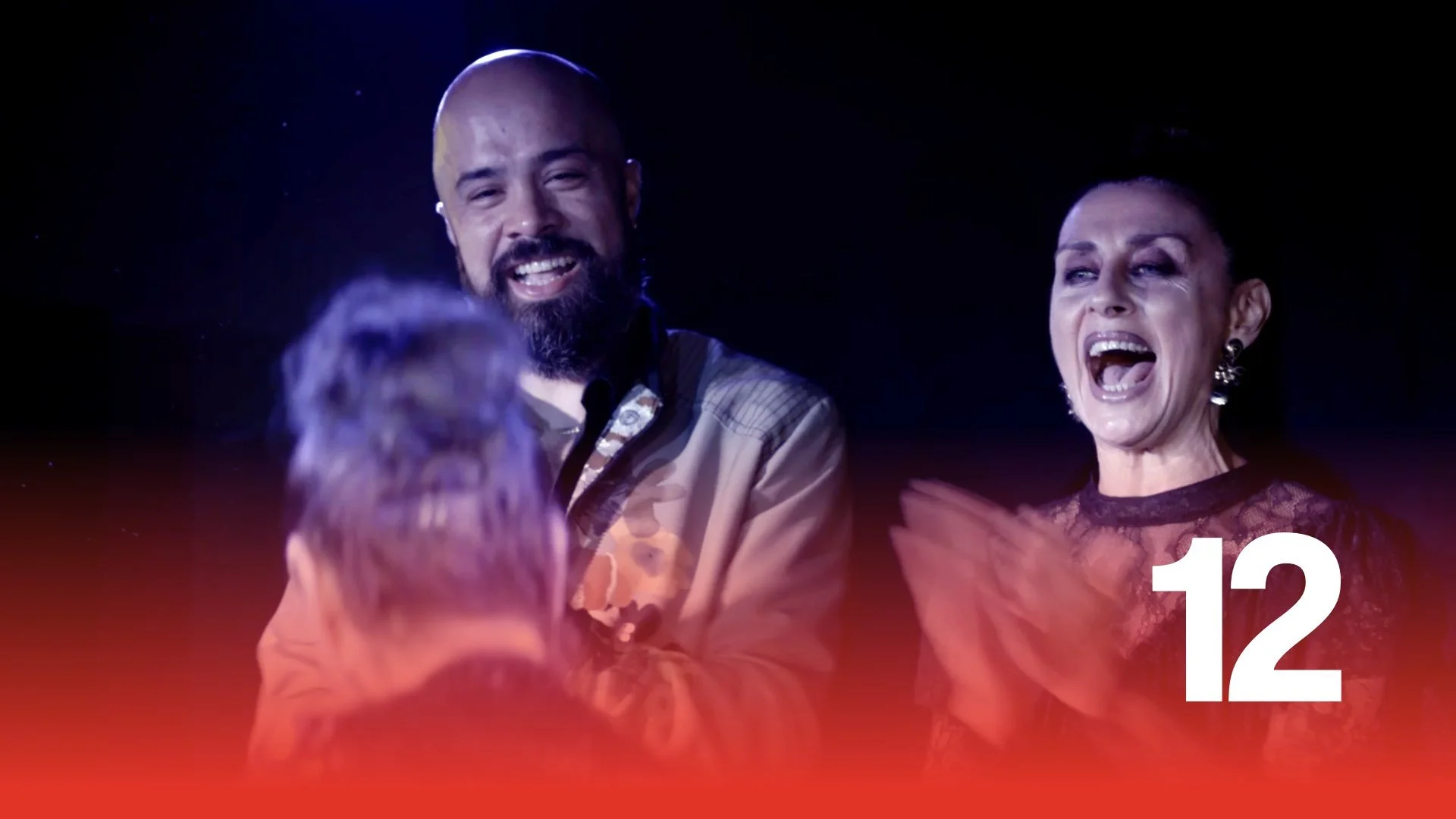
FLAMENCOPEDIA | EPISODE 12
The compás and the jaleos
The compás is the beat that structures flamenco and allows the singing, guitar, and dance to harmonize on stage. Clapping, footwork, guitar, and percussion create a rhythmic framework that the performers know and share. Over this framework, the jaleos also emerge: voices of encouragement that are part of the performance and of the communication among those who perform flamenco.
According to Antorrín Heredia, of Tablao La Quimera, the compás is one of the foundations of flamenco. It’s not just about counting beats—you have to internalize it until you can feel where each accent falls. Each flamenco style or “palo” has its own rhythmic characteristics, and knowing them allows artists to connect, accompany one another, and improvise.
Clapping, Footwork, and Percussion
Handclapping is one of the most characteristic rhythmic elements of flamenco. Ana Romero and Antonia Moya, from Tablao Flamenco Las Tablas, emphasize the precision required to accompany properly: the clapping maintains the rhythm, but it can also enrich it through accents, pauses, and varying intensities. Hence the importance of the palmeros—artists who specialize in a language far more complex than it may seem.
But practically any object can be turned into a percussion instrument. The guitar also has a rhythmic dimension; foot-tapping uses the feet as an instrument; and you can use your knuckles on a table, walking sticks, castanets, or a cajón. Pedro Córdoba, from the Centro Cultural Flamenco de Madrid, and Belén López highlight this direct relationship between rhythm and the body: in flamenco, making music and moving are often part of the same action.
The Cheering: Cheering Is Also Part of Flamenco
“Olé!”, “Come on!”, or “That’s how you sing it!” are some of the cheers you might hear during a performance. They aren’t interruptions or random exclamations. Rafael Jiménez “El Chispas” explains that they are part of the language of flamenco and occur at specific moments to acknowledge, encourage, or accompany what another artist is doing.
The audience can also participate. Knowing exactly when to shout “olé” requires some familiarity with flamenco, but spontaneous reactions are part of the experience. Eduardo Guerrero highlights precisely that energy that arises when performers and spectators connect, and the audience’s response ends up influencing what happens on stage.
A Shared Language
The rhythm provides a common structure, while the cheers, glances, and gestures allow for real-time communication. Thanks to these codes, artists who haven’t necessarily rehearsed together can put on a show, react to a falseta, accompany a cante, or follow the movements of the dancer.
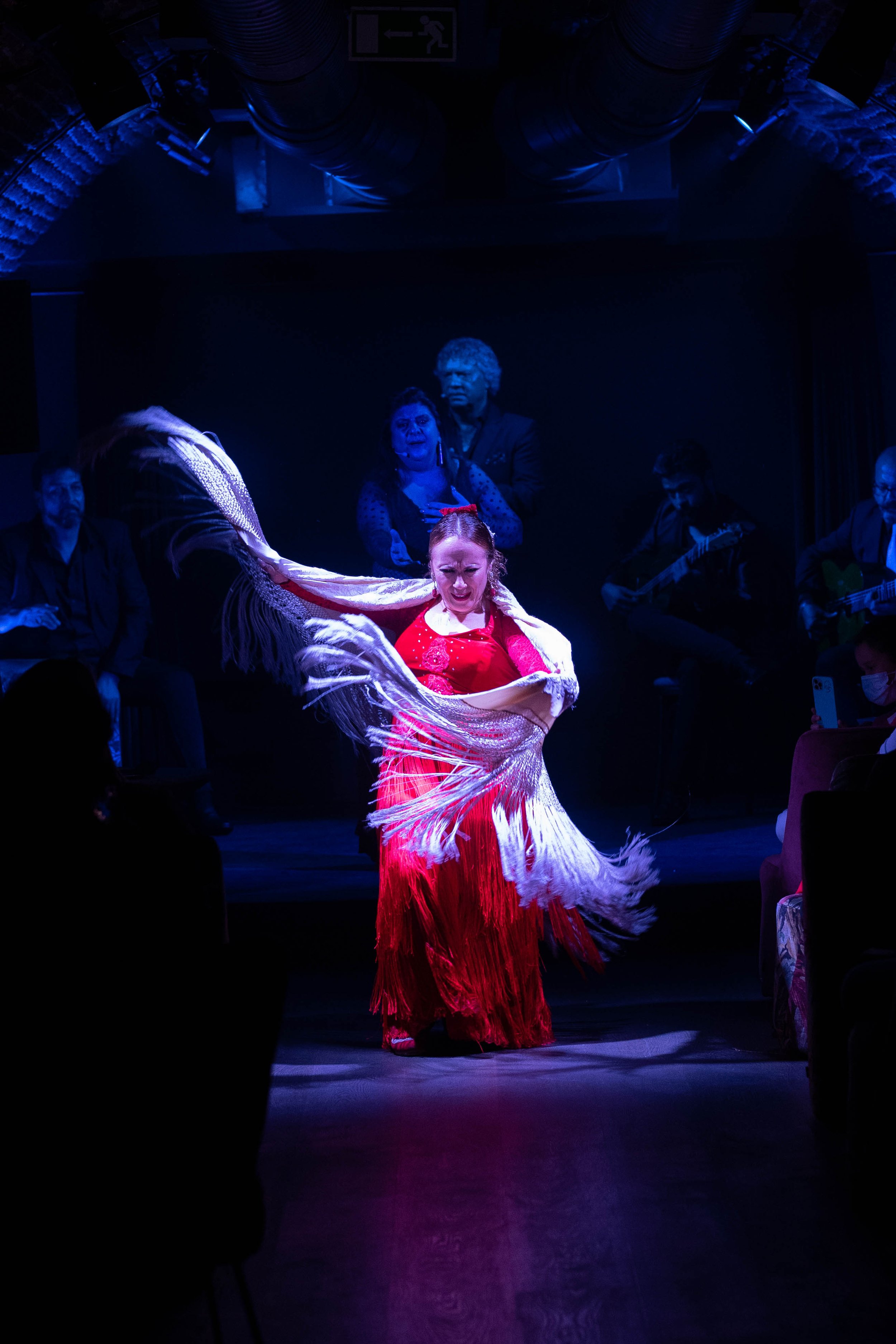
At the flamenco venues in Madrid, that connection is particularly evident because of the intimacy. A clap, a stomp, a glance, or an “olé” can change the intensity of a moment. The rhythm holds flamenco together; everything else can happen within it.
Flamencopedia: Discover All the Episodes
"Flamencopedia " is a 15-episode series that explores flamenco through its key figures.
Episode 1: Discovering Flamenco
Episode 2: Madrid, the Capital of Flamenco
Episode 11: The Guitar and Guitar Makers
Episode 12: The Rhythm and the Commotion
You might be interested in…

Experience Flamenco at Madrid's Tablaos
Consult the program
for flamenco shows in our tablaos.

Discover Madrid's World Heritage Sites
Visit the Community of Madrid