
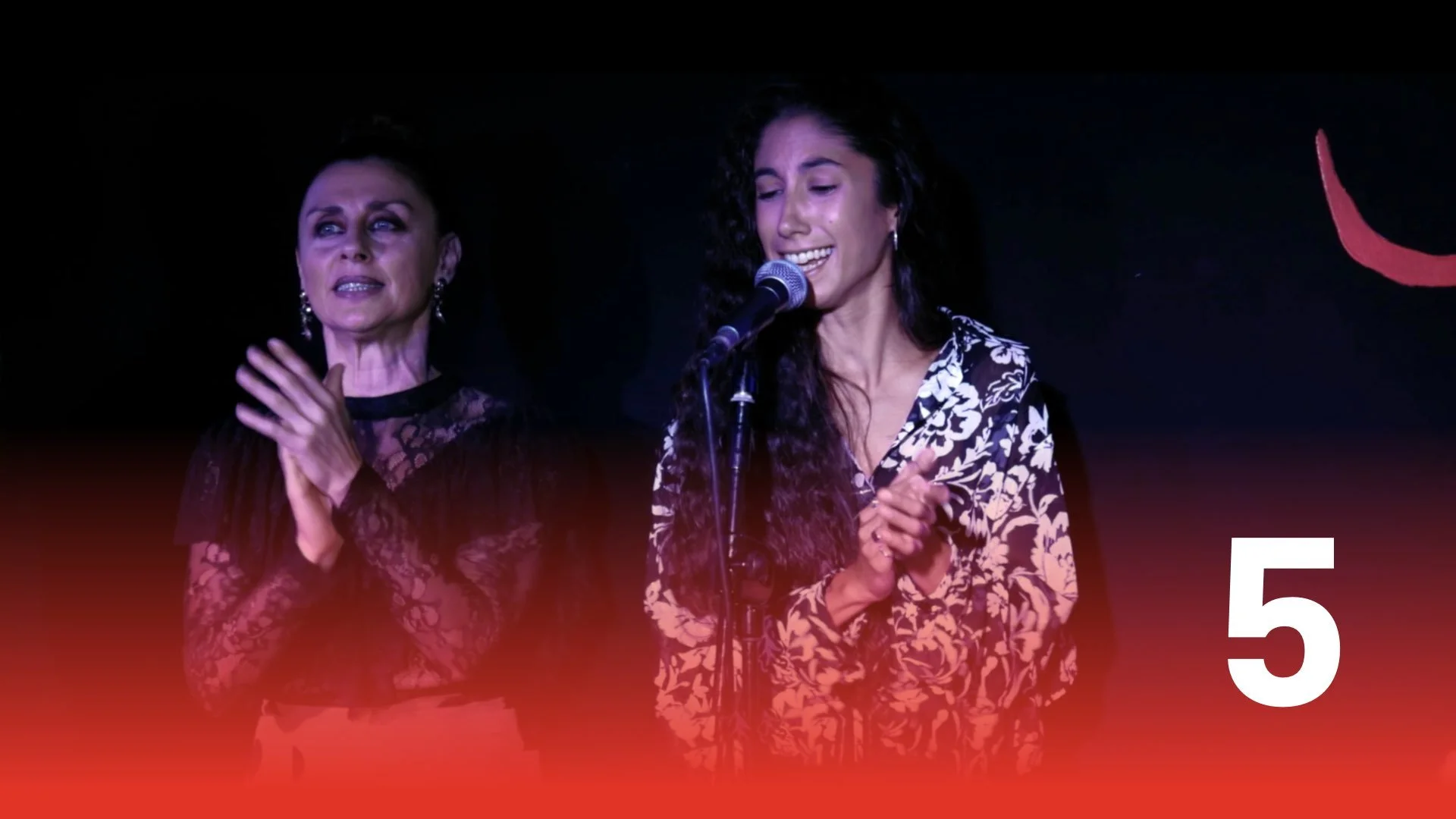
FLAMENCOPEDIA | EPISODE 5
Singing
Singing is one of the essential forms of expression in flamenco. The voice conveys stories, emotions, and ways of understanding life through different styles, or palos, but its power does not depend solely on what is sung: what matters is how it is performed and the singer’s ability to make each verse their own.
The lyrics speak of love, pain, loneliness, joy, family, and everyday experiences. Some stem from folk tradition, while others have a known author, but once they reach the stage, they take on the performer’s personal touch. For the singer Cristina Soler, every artist ultimately tells the story in their own way, drawing from their own experiences and emotions.
The Voice as a Form of Expression
Flamenco singing has its own codes, but there is no single way to sing. Ana Romero emphasizes precisely the importance of personality: the same lyrics can take on different meanings depending on who is performing them. Carmen Coy and Tacha also highlight this emotional dimension of flamenco singing, where technique must serve what the singer wishes to convey.
That expressive power reaches one of its most intense manifestations in the cante jondo, but flamenco encompasses very different styles. Teresa Hernández points out that it can express both sorrow and joy, and that each flamenco style has its own character.
Singing, guitar, and dance: a dialogue on stage
In a tablao, the singer does not perform in isolation. The voice is in constant dialogue with the guitar, and when accompanying the dance, the singer must be attentive to what is happening on stage. Pedro Córdoba highlights this communication among the performers: they all know the codes of flamenco, but they must listen to one another and react in the moment.
The dancer also listens to the singing. Belén López explains that dancing involves understanding what is being sung and letting the lyrics and the voice influence the movement. The dance, the guitar, and the singing thus create a conversation in which the spotlight shifts from one artist to another.
A voice that should move you
Technique, knowledge of styles, and mastery of rhythm are essential, but flamenco singing seeks something more difficult to measure: the ability to convey emotion. A voice can be powerful, broken, clear, or rough; what matters is that it finds its own way of expressing what it sings.
At the flamenco venues in Madrid, that connection takes place just a few meters from the audience. This closeness allows you to hear the breathing, the nuances, and the silences—and to understand why, in flamenco, a voice can transform a few words into a completely different experience every night.
Flamencopedia: Discover All the Episodes
"Flamencopedia " is a 15-episode series that explores flamenco through its key figures.
Episode 1: Discovering Flamenco
Episode 2: Madrid, the Capital of Flamenco
Episode 5: The Singing
Episode 11: The Guitar and Guitar Makers
Episode 12: The Rhythm and the Commotion
You might be interested in…

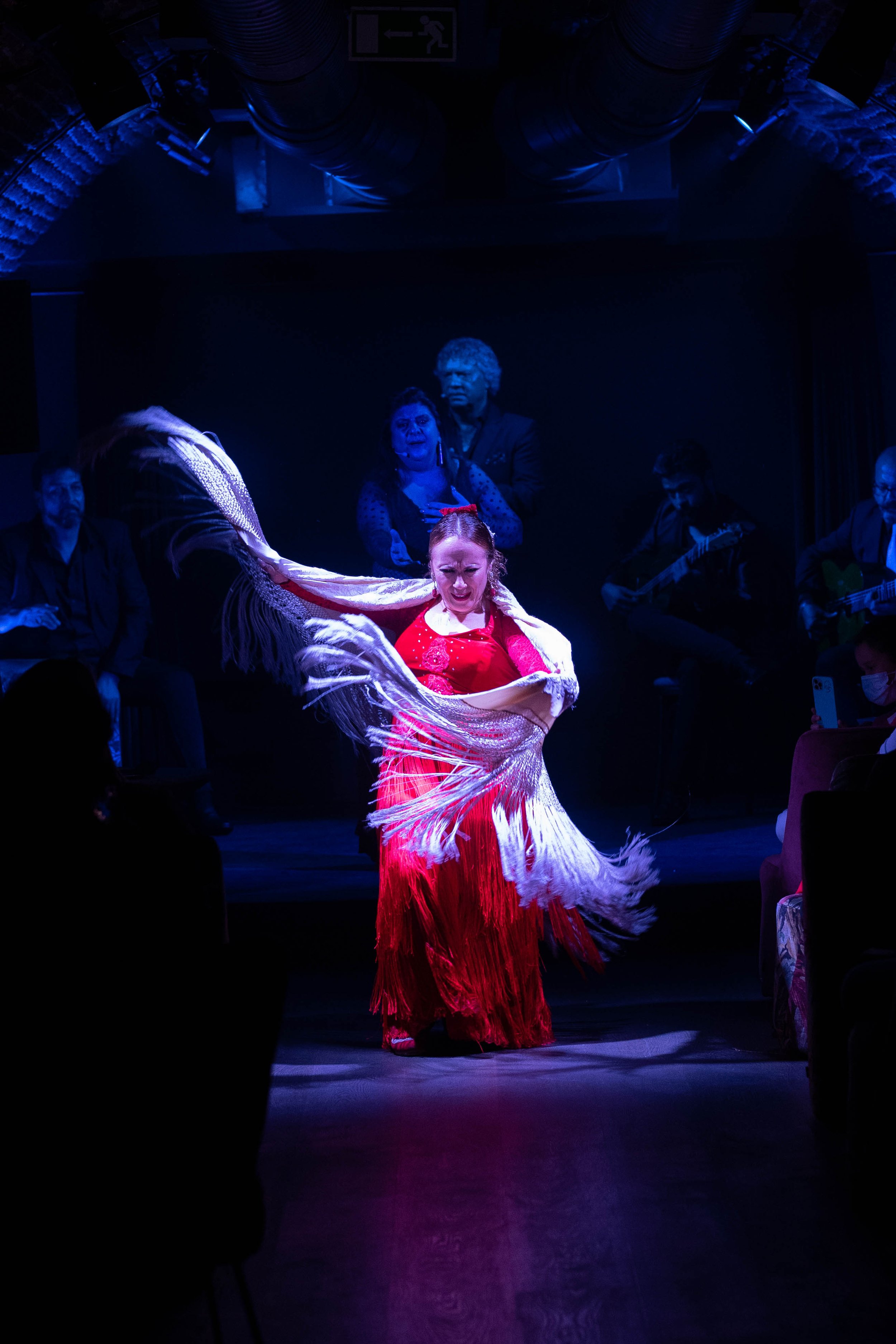
Experience Flamenco at Madrid's Tablaos
Consult the program
for flamenco shows in our tablaos.

Discover Madrid's World Heritage Sites
Visit the Community of Madrid