

FLAMENCOPEDIA | EPISODE 11
The guitar and guitar makers
The flamenco guitar is the result of musical evolution, but also of artisanal craftsmanship. Behind every instrument lies a combination of woods, proportions, and construction techniques that determine its sound and response. Madrid has played a prominent role in this history, both through its guitarists and through a tradition of guitar makers that remains alive today.
In the late 19th century, Rafael Marín published one of the first method books dedicated to the flamenco guitar, and in the 20th century, figures such as Ramón Montoya made decisive contributions to expanding the instrument’s possibilities. Later came guitarists such as Sabicas, Niño Ricardo, Víctor Monge “Serranito,” Manolo Sanlúcar, and Paco de Lucía, who played leading roles in an evolution that transformed the flamenco guitar into a solo instrument as well.
How is a flamenco guitar made?
Guitar making remains a largely artisanal craft. José Enrique Ramírez and Cristina Ramírez of Casa Ramírez explain a process in which the selection and drying of the wood, the thickness of the pieces, the assembly, and the finishes directly influence the final result. Every decision made by the luthier alters the way the instrument vibrates and responds to the player.
Although it shares its origins and many elements with the classical guitar, the flamenco guitar seeks its own distinctive sound and playing style. Traditionally, the goal is a quick response, a well-defined sound, and a construction adapted to the rhythmic and expressive needs of flamenco style.
Madrid and Its Guitar Makers
The history of the flamenco guitar in Madrid is closely linked to family-run workshops that have passed down the craft through generations. Casa Ramírez is part of that tradition and offers insight into the relationship between the craftsman and the musician: the luthier builds the instrument, but it is the performer who ultimately finds his or her own voice through it.
That relationship also explains why no two guitars are exactly alike. The woods and the construction contribute certain qualities, but each guitarist seeks a different response based on their technique, their sound, and their playing style.
An instrument that is constantly evolving
From Ramón Montoya to Paco de Lucía, the guitar gradually gained new capabilities, prominence, and musical possibilities without losing its essential role within flamenco. Its evolution is linked to generations of performers who expanded its musical language and to the artisans capable of adapting the instrument to new demands.
At the flamenco venues of Madrid, that story continues every night. The guitar accompanies the singing and dancing, keeps the beat, and can also take center stage. Behind every performance, there is thus a dual tradition: that of the flamenco performer and that of the craftsman who builds the instrument that makes that sound possible.
Flamencopedia: Discover All the Episodes
"Flamencopedia " is a 15-episode series that explores flamenco through its key figures.
Episode 1: Discovering Flamenco
Episode 2: Madrid, the Capital of Flamenco
Episode 11: The Guitar and Guitar Makers
Episode 12: The Rhythm and the Commotion
You might be interested in…

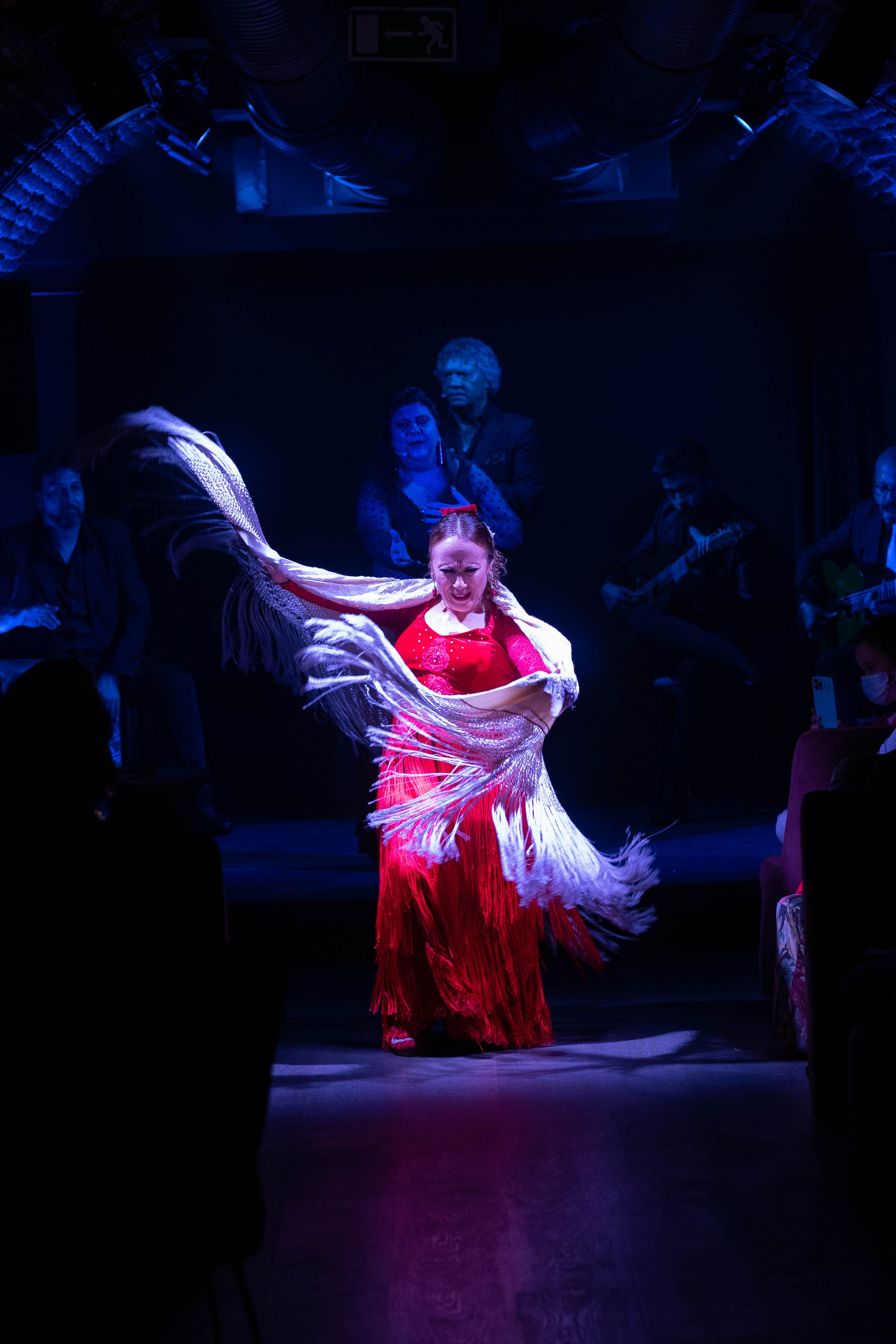
Experience Flamenco at Madrid's Tablaos
Consult the program
for flamenco shows in our tablaos.

Discover Madrid's World Heritage Sites
Visit the Community of Madrid