
FLAMENCOPEDIA | EPISODE 15
Fashion and esthetics
Flamenco aesthetics are part of the language of performance. Costumes and accessories do not serve merely a visual purpose: they complement the movement, adapt to the character of each style, and can become yet another means of expression for dancers and bailaoras.
The flamenco dress is probably its most recognizable symbol, with roots in traditional Andalusian and Romani clothing and in the dresses associated with Andalusian festivals. However, modern flamenco dance incorporates a much wider range of costumes, which evolve alongside the art form itself.
The cast also dances
"An artist's dress or a flamenco dancer's costume—it dances," says Blanca del Rey, from the Corral de la Morería.
This sentence sums up the importance of costumes on stage. Carmen Coy explains that, especially in the case of the “ bailaora,” certain elements of the costume can be incorporated into the dance itself.
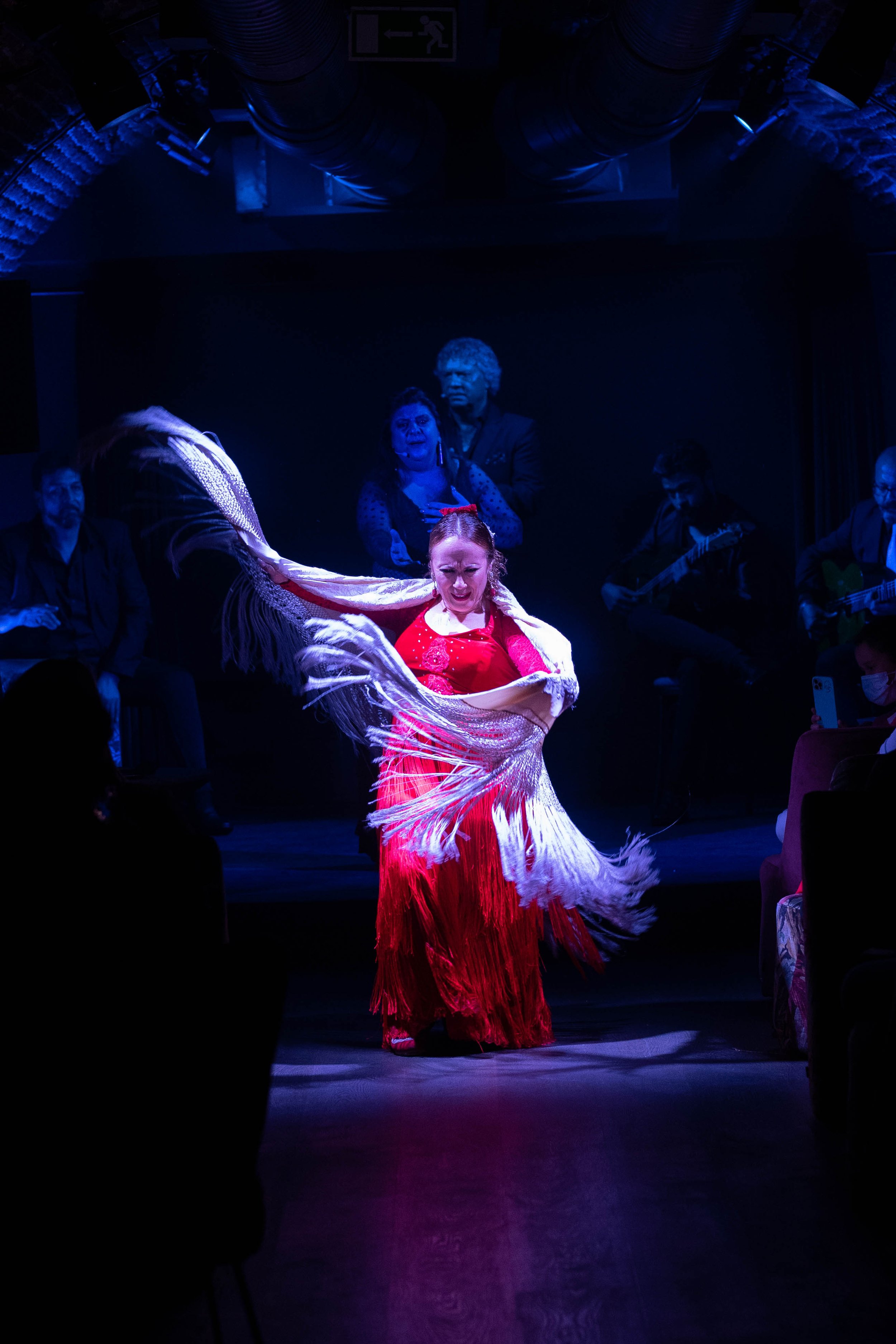
The bata de cola is one of the most obvious examples, but the aesthetic world of flamenco also includes shawls, fans, flowers, combs, polka-dot scarves, and other accessories that can visually enhance the movement.
Belén López identifies some of the most recognizable elements of this flamenco image: “the beauty mark, the flower in her hair, the bata de cola.”
Dressing to Suit the Character of Each Club
There is no single way to dress for flamenco dancing. Tacha points out that each style has its own distinct character and that the artist can choose their costume based on the piece they are going to perform. The costume thus helps shape the personality of a performance, just as dance and movement.
Flamenco fashion does not stand still either. It has its own cycles and evolves by incorporating new silhouettes, materials, and influences. For Eduardo Guerrero, costumes can be just as important as choreography or stage presence itself. In his projects, he seeks to collaborate with designers and bring together different artistic disciplines to add new layers to his work. Tradition and contemporary creation thus coexist in the flamenco aesthetic.
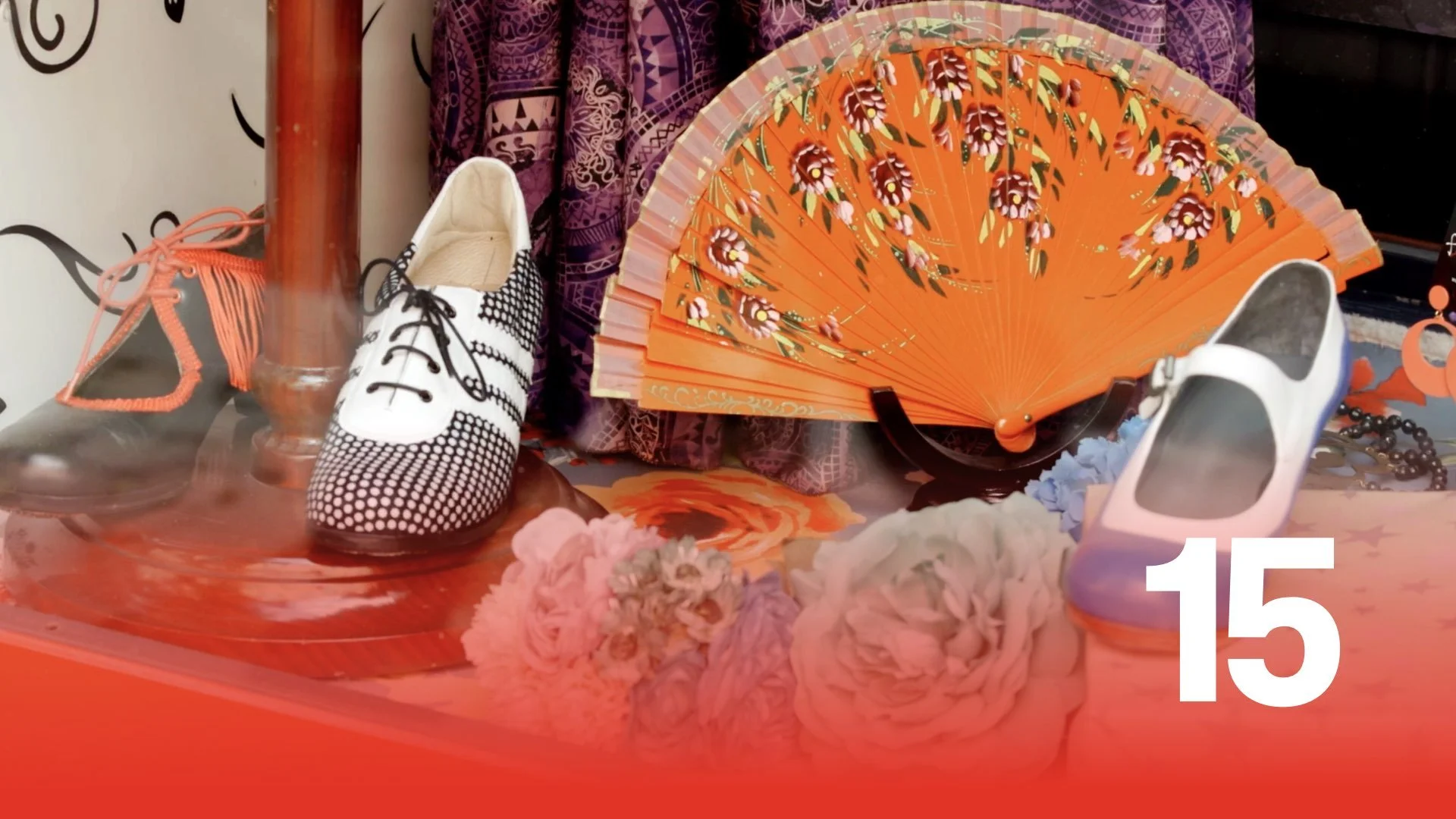
Flamenco Shoes: Dressing Up and Making Music
Few items of clothing better illustrate the union of aesthetics and function than flamenco dance shoes.
David Martínez de la Plaza, of El Flamenco Vive, points out that one of the main differences between flamenco shoes and other types of shoes lies in the sole. It must be sufficiently rigid and have nails on the toe and heel to allow for the percussive sound of the footwork.
The design has also evolved. Straps, laces, and various solutions have been added to the traditionally simple models to better secure the foot and prevent the shoes from getting caught on items such as shawls or long-tailed robes. Their manufacture also retains a significant artisanal dimension: the leather is cut, sewn, and then molded over different lasts until the shoe is complete. In this way, the feet of the bailaor or the bailaora not only accompany the movement—they also become a rhythmic instrument connected to the flamenco rhythm.
Crafts, Fashion, and Flamenco
There is a whole world of specialized trades surrounding flamenco attire. Shoemakers, designers, dressmakers, and artisans produce garments and accessories that must simultaneously meet aesthetic and performance-related needs. In the flamenco tablaos of Madrid, this aesthetic can be observed just a few meters away: the movement of a bata de cola or a shawl, the tapping of shoes, or a contemporary costume designed specifically for an artist. The image of flamenco changes over time, but it retains one essential characteristic: what the artist wears can be part of what they wish to express.
Flamencopedia: Discover All the Episodes
"Flamencopedia " is a 15-episode series that explores flamenco through its key figures.
Episode 1: Discovering Flamenco
Episode 2: Madrid, the Capital of Flamenco
Episode 11: The Guitar and Guitar Makers
Episode 12: The Rhythm and the Commotion
Episode 13: Long Live the Show
Episode 15: Fashion and Aesthetics
You might be interested in…

Experience Flamenco at Madrid's Tablaos
Consult the program
for flamenco shows in our tablaos.

Discover Madrid's World Heritage Sites
Visit the Community of Madrid