
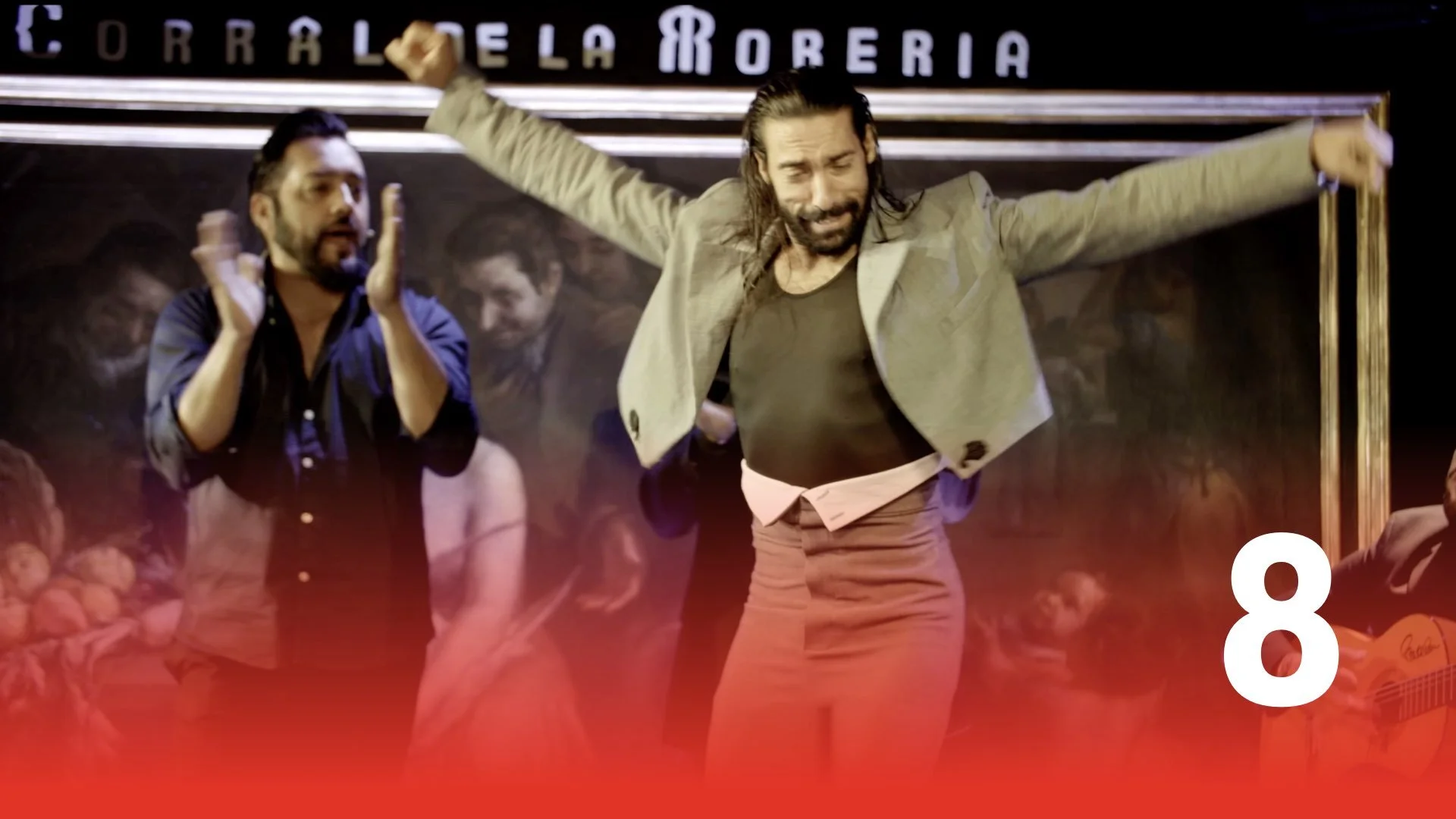
FLAMENCOPEDIA | EPISODE 8
The baile
Flamenco dance transforms music and emotion into movement. The body interprets the singing, engages in a dialogue with the guitar, and participates in the rhythm, but each dancer does so through their own unique personality. Technique, strength, improvisation, and emotion come together on stage to create a language in which the hands, feet, gaze, and silence also speak.
For Blanca del Rey, dancing flamenco means expressing through the body what the music conveys. Carmen Coy also emphasizes the importance of listening: the dancer does not simply perform a choreography, but must be attentive to the singing, the guitar, and everything happening around them. That relationship explains why the same piece can change from one performance to the next.
Dancing to the singing and guitar music
Dance is part of a conversation. Eduardo Guerrero points out that the dancer must understand the music and what he or she is dancing in order to later develop his or her own way of expressing it. Each flamenco style or “palo” has its own character and codes that shape the movement, ranging from the intensity and introspection of certain songs to others of a more festive nature.
Juan Manuel del Rey, from the Corral de la Morería, highlights precisely this interaction among the artists as one of the unique aspects of flamenco. The dancer listens and responds; the guitar and singing can follow him, accompany him, or provoke a reaction. What happens on stage is created by everyone together.
Techniques for Improvising
The freedom of flamenco dance requires solid training. Juan Andrés Maya, from Tablao La Carmela, and Pedro Córdoba, from Centro Cultural Flamenco de Madrid, emphasize the importance of knowledge, experience, and mastery of the conventions. Only after internalizing them can the artist react freely and transform a learned movement into something of their own.
That preparation is also physical. The footwork, the turns, the coordination, and the body control all require strength, endurance, and precision. But, as Belén López points out, technique is not an end in itself: it must allow the performer to stop thinking about it and focus on conveying the message.
A unique style on stage
No two dancers move exactly the same way. Posture, hand movements, gaze, the way they walk or come to a stop—all these elements are part of the artist’s personality and form a language that evolves over the years. The flamenco movement can be forceful or restrained, fast or almost motionless: expressiveness does not depend on the amount of movement, but on its intention.
At the flamenco venues in Madrid, that personality is particularly evident in the dancers’ closeness to the audience. From just a few meters away, you can see their effort, their breathing, the sound of their feet, and even their smallest gestures. Flamenco dance thus becomes a physical and emotional experience that unfolds live and is never repeated exactly the same way.
Flamencopedia: Discover All the Episodes
"Flamencopedia " is a 15-episode series that explores flamenco through its key figures.
Episode 1: Discovering Flamenco
Episode 2: Madrid, the Capital of Flamenco
Episode 8: The Dance
Episode 11: The Guitar and Guitar Makers
Episode 12: The Rhythm and the Commotion
You might be interested in…

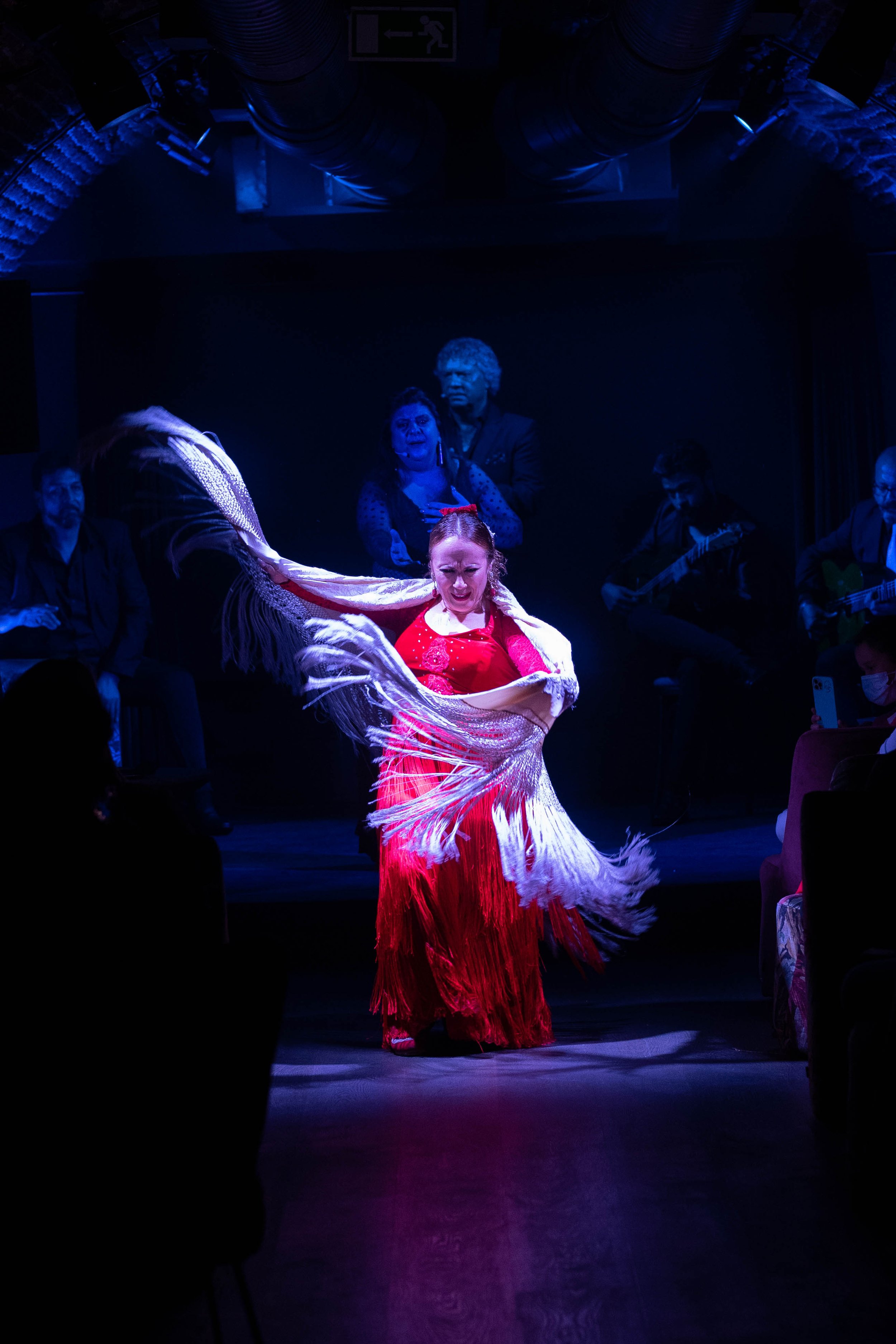
Experience Flamenco at Madrid's Tablaos
Consult the program
for flamenco shows in our tablaos.

Discover Madrid's World Heritage Sites
Visit the Community of Madrid