

FLAMENCOPEDIA | EPISODE 3
What is a tablao
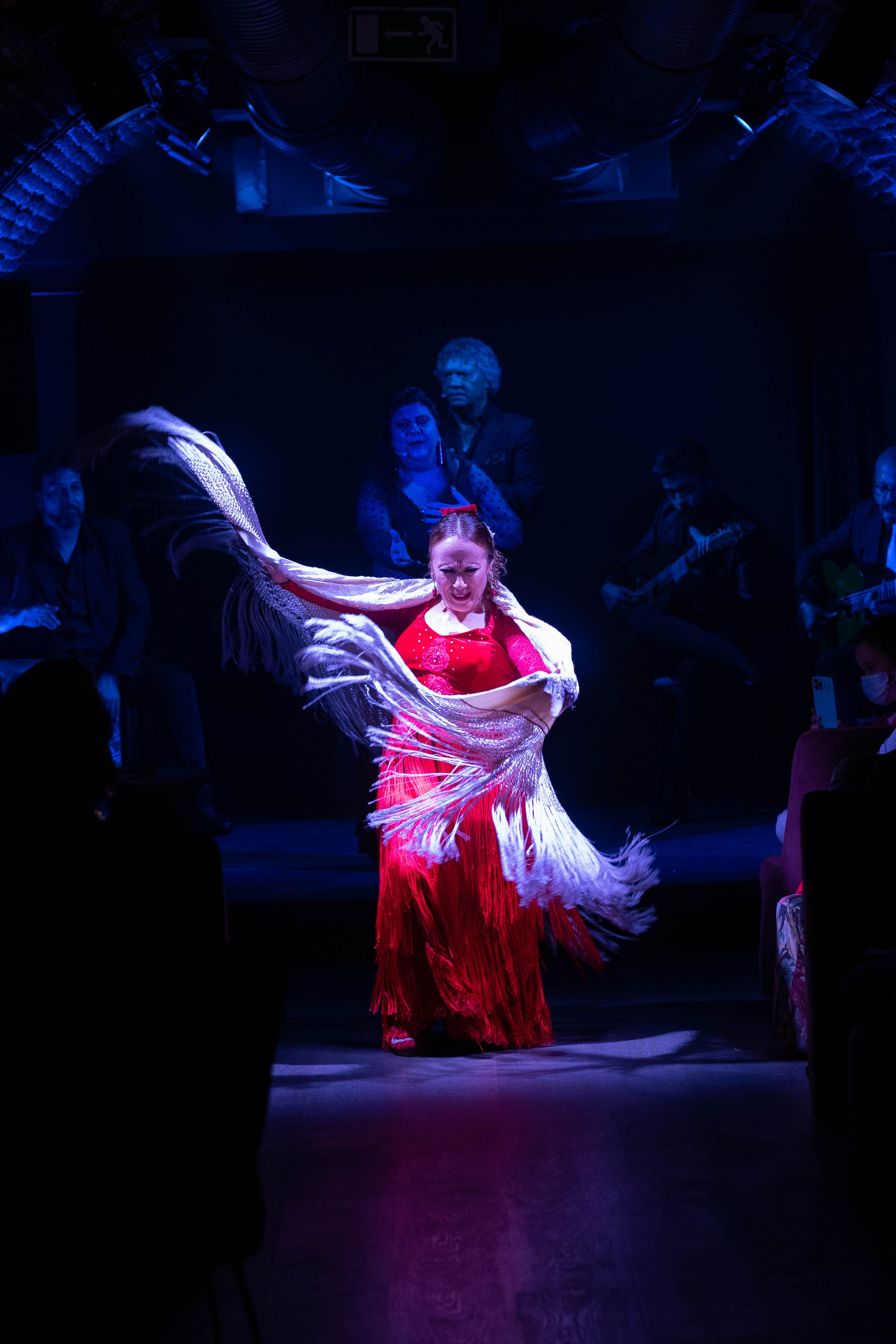
A tablao is a performance venue specializing in flamenco, where singing, dancing, guitar, and clapping take place just a few meters from the audience. The intimacy, improvisation, and interaction among the performers make each show unique and make the tablao one of the best places to experience and feel flamenco.
For Caro Fernández, from Taberna Flamenca El Cortijo, the tablao is “something sacred,” a space deeply connected to the essence of flamenco. Antorrín Heredia, from Tablao La Quimera, defines it through its essential elements: singing, dancing, guitar, and handclapping—preferably without microphones—and a direct connection between artist and audience: “You look at me and I look at you; I feel, and I make you feel.”
From singing cafés to flamenco tablaos
Today's tablaos trace their origins to other historic venues of flamenco. Javier Andrade, from Teatro Flamenco Madrid, recalls a journey that takes us through private parties, cafés cantantes, and the era of flamenco opera. For Jonatan Miró, from Flamenco de Leones, the tablaos are direct descendants of those cafés cantantes—venues with a varied program in which, as Armando del Rey of the Corral de la Morería, flamenco might be featured on certain days of the week.
The modern tablao format took hold in the mid-20th century. Juan Manuel del Rey recalls that his father, Manuel del Rey, opened the Corral de la Morería in 1956 with a concept that combined a regular flamenco program, renowned artists, and fine dining. Since then, Madrid has developed an extraordinary concentration of these venues, whose history and diversity are also explored in The Tablaos of Madrid.
A show that comes to life every night
One of the essential characteristics of the tablao is that the show isn't completely set in stone. Nino de los Reyes describes it as a place where something new happens every day and you never know exactly what's going to happen. Marisol Navarro, from Tablao Flamenco Las Tablas, uses a similar expression: the show “is created and comes together each night.”
That freedom does not mean a lack of preparation. Pedro Córdoba, from the Centro Cultural Flamenco de Madrid, points out that an artist may have danced, rehearsed, and performed in numerous shows, but stepping onto the tablao means confronting “the truth.” The structure, the experience, and the rhythm allow you to react to what others are doing and build the performance in real time.
The University of Flamenco
The tablao is not just a place for performance, but also for learning. Antorrín Heredia considers it the place where one learns “the great things, the fundamentals,” and recalls the role it has played in the careers of great artists. Guitarist Antonia Jiménez uses a particularly vivid comparison: the tablao is “like college”—the place where the techniques one has learned are put into practice and where those that still need to be mastered are revealed.
That demand turns every performance into an artistic challenge. Technical skill is essential, but it must be combined with the ability to listen, react, and communicate with the other performers.
Intimacy: The audience is part of the experience
The proximity between the stage and the audience is another defining feature of the tablao. For the“ bailaora ” Belén López, this closeness is necessary because the artist is sharing something intimate. The short distance allows the audience to perceive the physical effort, the glances exchanged between the performers, the sound of their feet, or even their breathing, and fosters a connection that is difficult to replicate in larger venues.
That is also part of what makes them so moving. As Armando del Rey puts it, there are many places that can offer an experience; but to truly move people is something else entirely. In the flamenco tablaos of Madrid, that combination of intimacy, improvisation, and tradition allows the audience to experience flamenco right where it continues to unfold live, every night, in a way that can never be replicated.
Flamencopedia: Discover All the Episodes
"Flamencopedia " is a 15-episode series that explores flamenco through its key figures.
Episode 1: Discovering Flamenco
Episode 2: Madrid, the Capital of Flamenco
Episode 3: What Is a Tablao?
Episode 11: The Guitar and Guitar Makers
Episode 12: The Rhythm and the Commotion
You might be interested in…

Experience Flamenco at Madrid's Tablaos
Consult the program
for flamenco shows in our tablaos.

Discover Madrid's World Heritage Sites
Visit the Community of Madrid