
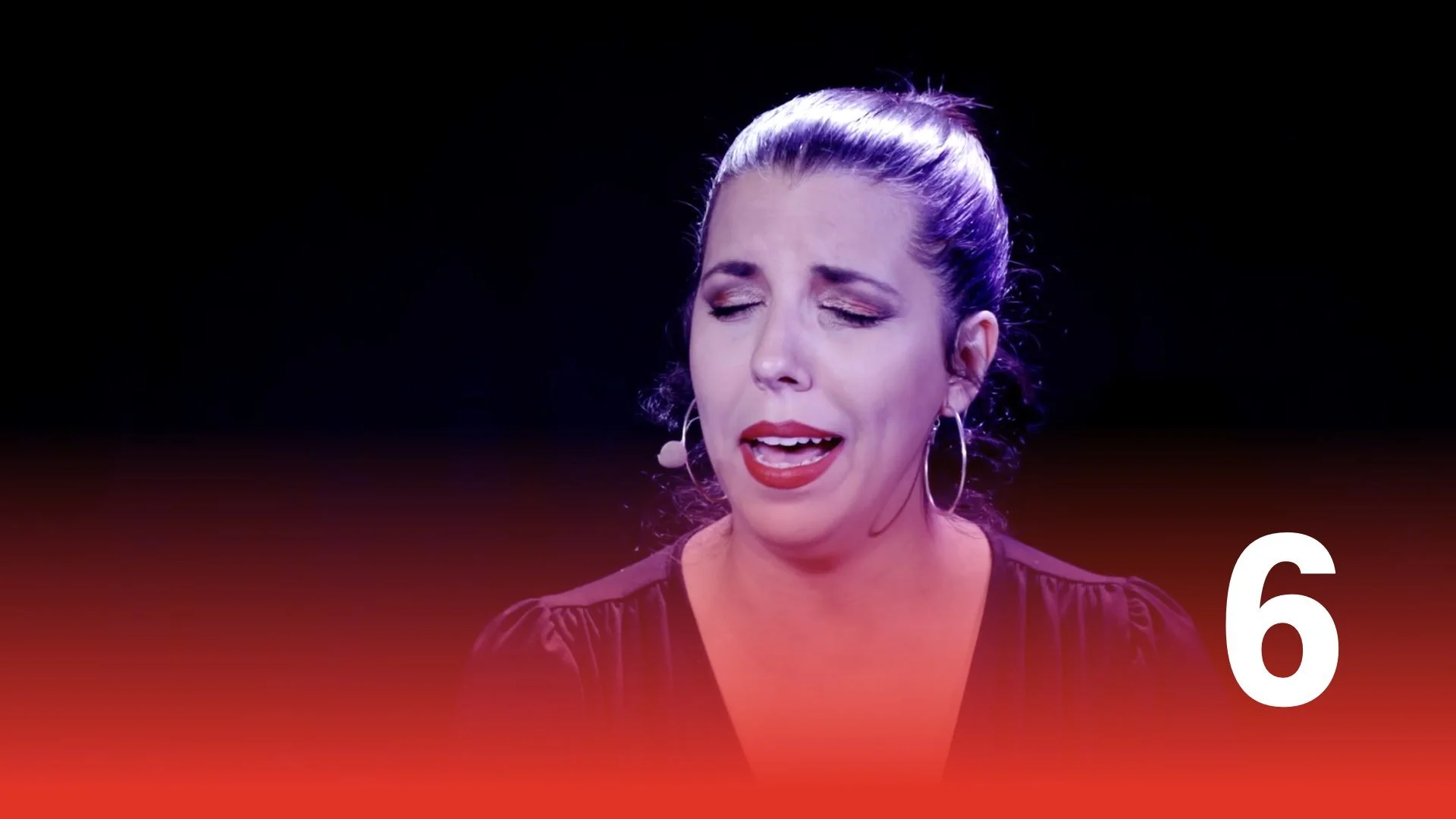
FLAMENCOPEDIA | EPISODE 6
El grito jondo
There are moments in flamenco when the voice seems to emerge from somewhere deeper than the throat. Cante jondo seeks to express fundamental emotions—pain, loneliness, love, loss—and finds in the quejío, that “ay” so characteristic of flamenco, one of its most recognizable expressions.
For Anja Volljardt, from Café Ziryab, “lo jondo” is related to what springs from the deepest part of one’s being. Cristina Soler emphasizes the need to feel what is being sung in order to convey it, while Antonia Moya, from Tablao Flamenco Las Tablas, links it to emotions that are sometimes difficult to express in any other way. The flamenco singing thus transforms the voice into a vehicle for an intimate experience that can be shared by the entire audience.
The "quejío": when the voice becomes emotion
One of the most characteristic forms of flamenco singing is the “quejío.” Antorrín Heredia, from Tablao La Quimera, finds in that “ay” a direct way to express what he feels inside. Words aren’t necessarily needed: the voice can be drawn out, break, or change in intensity, conveying an emotion all on its own.
That ability to communicate is also what Jonatan Miró, from Flamenco de Leones, identifies as one of the distinctive features of flamenco. For the dancer Eduardo Guerrero, emotion can arise unexpectedly during a performance, when the connection between the artists transforms what was planned and takes the show to another level.
An art that takes time
The intensity of flamenco does not stem solely from spontaneity. Juan Manuel del Rey, from the Corral de la Morería, and Blanca del Rey emphasize the importance of experience, hard work, and the years needed to mature artistically. The emotion may be immediate, but having the tools to express it requires knowledge and skill.
That combination of preparation and emotion is particularly evident in the flamenco stage, where the performers must listen to and respond to one another. Belén López points out precisely that technique ultimately allows for greater freedom: the greater one’s mastery of the language, the more opportunities there are to lose oneself in the moment.
From Pain to Joy
"Lo jondo" does not mean that flamenco is exclusively sad. Teresa Hernández points out that it encompasses a wide range of emotions, from the deepest sorrow to celebration and joy. The various flamenco styles allow us to explore that broad emotional landscape.
Perhaps that is why it is so difficult to pinpoint exactly where their power to move us lies. It may lie in a lyric, in a silence, in a voice that breaks, or simply in an “ay.” In the flamenco stages of Madrid, that emotion unfolds just a few meters from the audience: a moment that is born on stage and, when it works, ceases to belong solely to the performer.
Flamencopedia: Discover All the Episodes
"Flamencopedia " is a 15-episode series that explores flamenco through its key figures.
Episode 1: Discovering Flamenco
Episode 2: Madrid, the Capital of Flamenco
Episode 6: The Deep Cry
Episode 11: The Guitar and Guitar Makers
Episode 12: The Rhythm and the Commotion
You might be interested in…

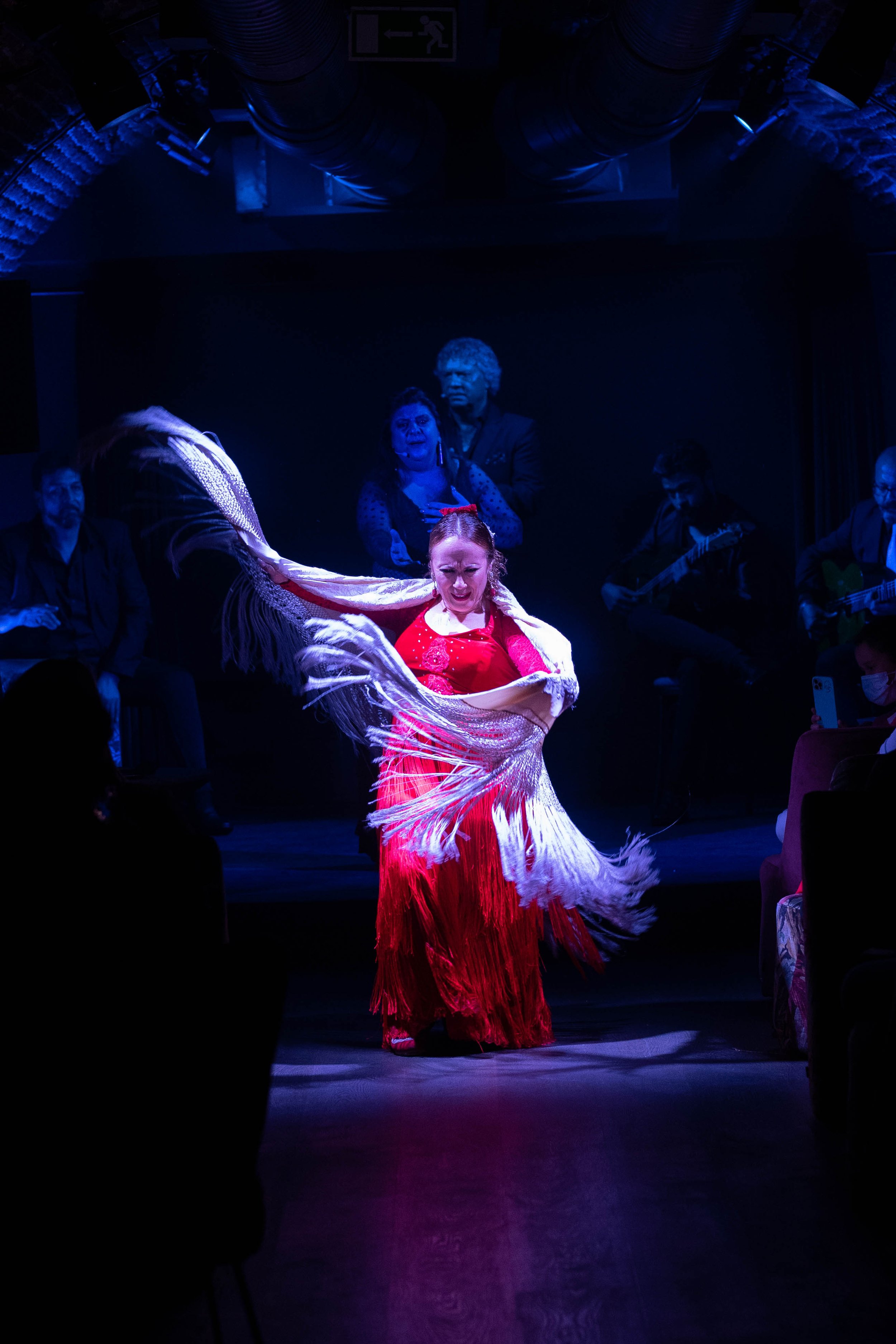
Experience Flamenco at Madrid's Tablaos
Consult the program
for flamenco shows in our tablaos.

Discover Madrid's World Heritage Sites
Visit the Community of Madrid