
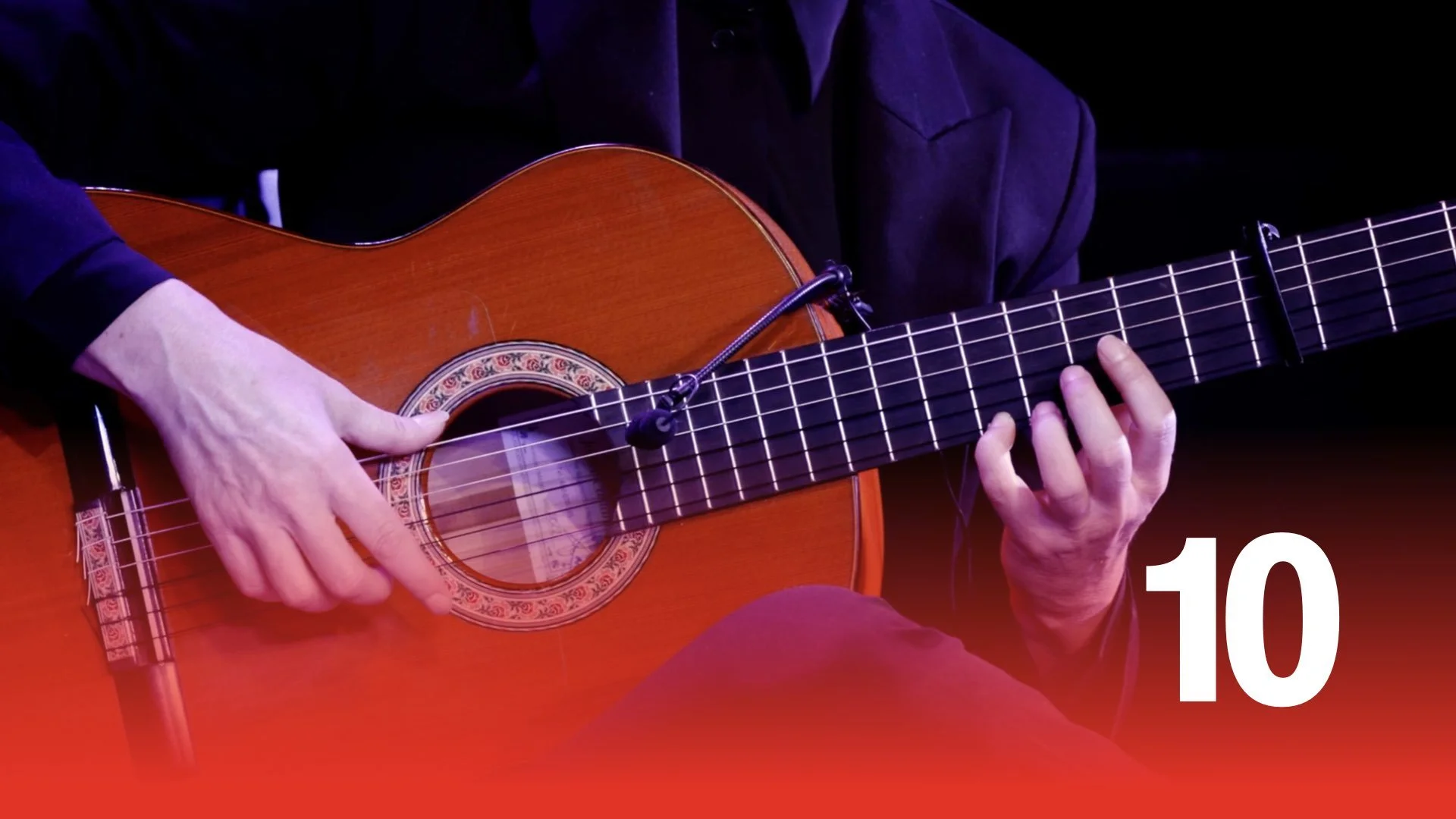
FLAMENCOPEDIA | EPISODE 10
The toque
In flamenco, playing the guitar is much more than just providing accompaniment. Guitar playing has its own language, with techniques, sounds, and stylistic devices that allow the guitarist to support the singing and dancing, engage in a musical dialogue with the other performers, or take center stage through a falseta. Rhythm, technique, and sensitivity come together in an instrument that has evolved alongside flamenco itself.
For guitarist Antonia Jiménez, playing flamenco requires a deep understanding of its conventions. Each flamenco style or “palo” has a character and structure that the guitarist must master in order to know not only what to play, but also when to play it. Listening is just as important as playing.
Strumming, picking, and lift-off
The flamenco guitar has developed distinctive techniques that are integral to its sound. Rasgueado allows for the creation of different rhythmic textures through finger movement; picado articulates rapid sequences of notes; and alzapúa combines the use of the thumb on the strings to produce highly intense melodic and rhythmic lines.
José Manuel Martínez “El Peli” explains how these techniques become part of a guitarist’s vocabulary and are used in different ways depending on what’s happening on stage. They aren’t just technical displays: they serve to accompany, respond, create tension, or drive the rhythm.
The falseta: when the guitar speaks
One of the moments when the guitarist takes center stage is the falseta, a musical phrase or passage that is integrated into a specific palo. It can appear between sung or danced sections and offers the guitarist a space to express his personality and his own interpretation of flamenco.
At the same time, the guitar maintains a constant dialogue with the singing and the dance. It must follow a voice, respond to a movement, or adjust its intensity based on what the other performers are doing. The rhythm provides the common ground that enables this communication.
Tradition and Evolution
Flamenco guitar has undergone an extraordinary technical and musical evolution. Víctor Monge “Serranito, ” one of the leading figures in flamenco guitar, represents a generation that expanded the instrument’s possibilities as a solo instrument without severing its connection to singing and dance.
That evolution continues on stage. At the flamenco venues in Madrid, the guitar can provide accompaniment, set the rhythm, or take center stage alone before the audience. Behind that sound lies an instrument specifically crafted to meet the needs of flamenco, whose history and characteristics are explored in The Guitar and Guitar Makers.
Flamencopedia: Discover All the Episodes
"Flamencopedia " is a 15-episode series that explores flamenco through its key figures.
Episode 1: Discovering Flamenco
Episode 2: Madrid, the Capital of Flamenco
Episode 10: The Touch
Episode 11: The Guitar and Guitar Makers
Episode 12: The Rhythm and the Commotion
You might be interested in…

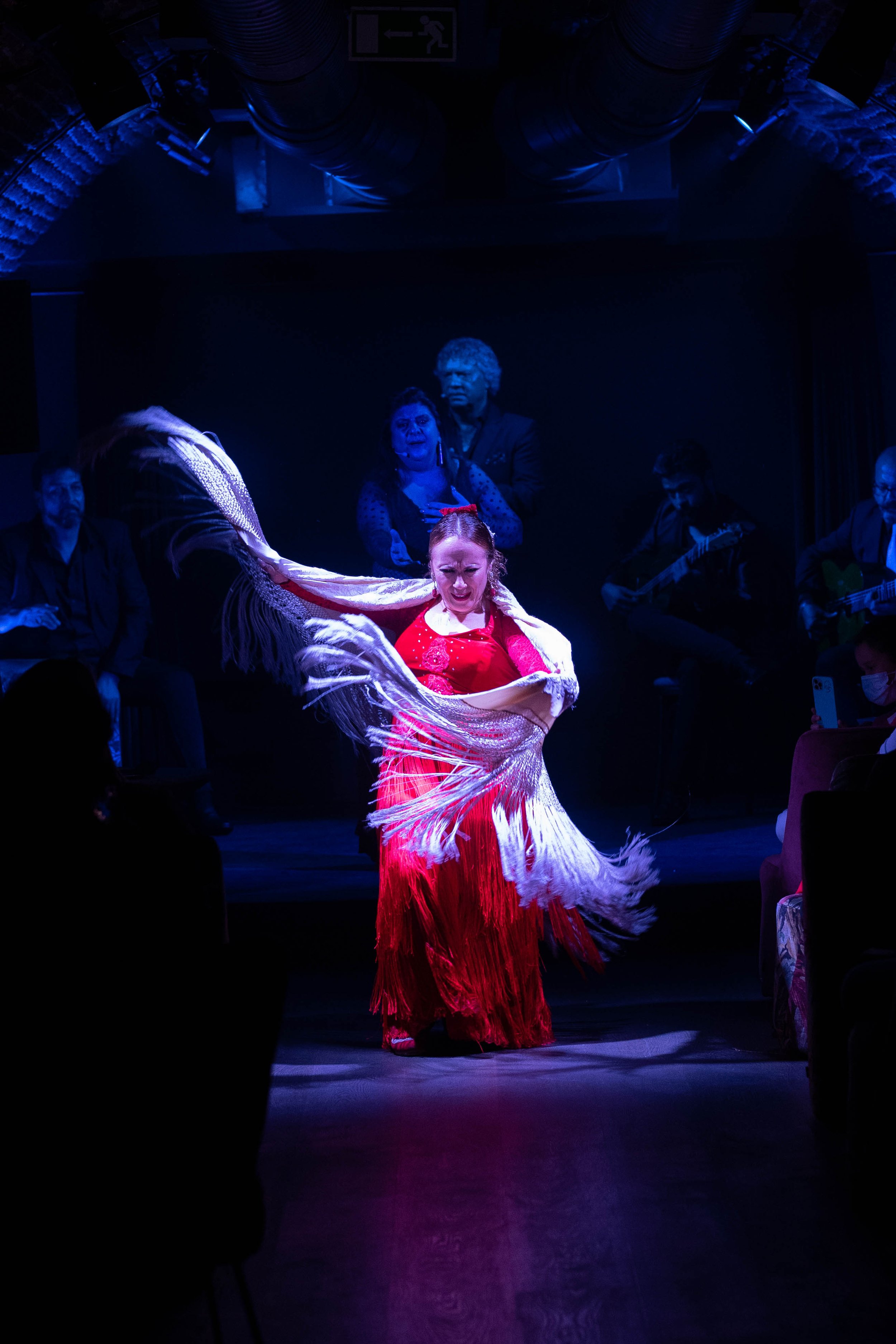
Experience Flamenco at Madrid's Tablaos
Consult the program
for flamenco shows in our tablaos.

Discover Madrid's World Heritage Sites
Visit the Community of Madrid